



Welcome. The Partnership for Peace Consortium (PfPC) of Defense Academies and Security Studies Institutes is a voluntary international association of institutes of higher learning in defense and security affairs that is supported by the United States, Germany, Austria, Switzerland and NATO; further background is available from the “About us” tab. The Consortium is an "in the spirit of PfP" activity that supports the security policy priorities of its stakeholders.

Advanced Distributed Learning Working Group Meeting in Georgia


From 1-3 November 2011, the members of the Partnership for Peace Consortium’s ADL Working Group met for their annual conference, this time in Tbilisi, Georgia. The event, kindly hosted by the Georgian Ministry of Defense and organized in close cooperation with the ISN and the PfP Consortium, focused on the introduction of new and updated open-source tools, discussion of current members’ activities as well as the launch of new ADL projects.

The next ADL Working Group conference will be hosted by the Austrian Ministry of Defense in Vienna from 6-8 November, 2012. Participation is by invitation only; interested e-learning professionals from security- and defense-related educational institutions may contact the ADL WG chairman Reto Schilliger.

Read more details on ISN blog.

Beyond Frozen Conflicts in South East Europe: the Belgrade-Pristina/ Pristina-Belgrade Dialogue and its Regional Implications


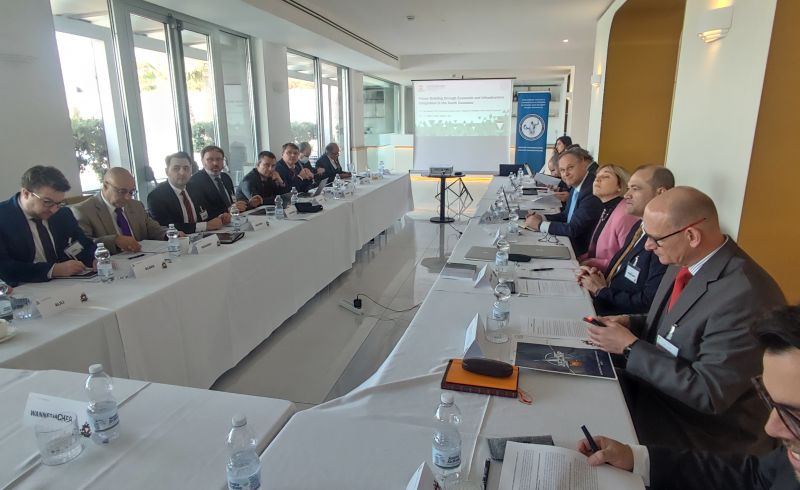
The PfP- Consortiums RSSEE SG workshop “Beyond Frozen Conflicts in South East Europe: the Belgrade-Pristina/ Pristina-Belgrade Dialogue and its Regional Implications” was held from 22 to 24 September 2011 in Pristina. Kosovo is a great case study in international cooperation and coordination among various international stakeholders administering the territory, observing and monitoring processes, and influencing decision-making. A major disruption to these processes was caused by the outbreak of violence on the contested border in northern Kosovo on 20 July 2011.

The Study Group “Regional Stability in South East Europe” focuses its academic and scientific approach on issues of regional stability under the firm principle of inclusiveness of experts from all different constituencies, authorities and countries of the Western Balkans and the International Community alike. The 23rd workshop – first in 12 years of RSSEE activities to be convened in Pristina – assembled 37 renowned experts from 12 countries including high ranking Serbian officials. It provided an atmosphere highly conducive to meaningful discussion and resulted in tangible policy recommendations for the way forward.

See more pictures attached. To read more about the PfP- Consortiums RSSEE SG, access PfPC Collaboration Portal (requires registration and login).

Coming soon: GlobalNET

PfPC Collaboration portal is proud to announce that GlobalNET will be launching soon. GlobalNET, the secure, trusted, and collaborative platform joining defense and security experts across the globe, will be replacing the existing PfPC portal. It will be offering a much more robust experience and foster collaboration within PfPC community and the greater GlobalNET community. By using GlobalNET, users can access focused resources, research, and people to advance professional and personal goals for security cooperation. To learn more about GlobalNET, please watch our introduction video:


If you would like to view the video with captions in any of the seven (7) supported languages, please click the “cc” icon within the player and select your language.

13th PfPC Annual Conference, Garmisch-Partenkirchen Germany

The 13th PfPC annual conference took place at the George C. Marshall Center in Garmisch-Partenkirchen, Germany on 23-24 June 2011.

This years’ event was held under the overall topic “The Partners View: Best Practices and Way Ahead”. Thus, the focus of the conference lay on the various experiences of the partners and their evaluation of the cooperation with PfPC.

Some 70 participants from 21 countries attended the annual conference to discuss past achievements and potential fields for improvement. These figures illustrate the capabilities and the relevance of the PfP Consortium and its partners. The increasingly high number of represented institutions from various fields, types and countries has to be highlighted as a great success.

Of special interest for the most recent meeting was the handing over of the Senior Advisory Council (SAC) chairmanship from Dr. MacDougall to Lieutenant General (Ret) Keith Dayton, also Director of the Marshall Center. In this context the conference can be seen as the first step of a transformation process to broaden and deepen the structure of the PfP Consortium and its programs and products.

The distinguished keynote speakers, Mr. Hans-Bernhard Weisserth, Acting Head of the European Security Defence College and Major General Victor Balabin, Commandant, Military Institute, Kiev National University, contributed meaningful insights, stressing the necessity of cooperation and networks, and the coherent progress in defense education respectively.

The conference themes were arranged in four panels, with special consideration on the inclusion of all PfPC Working Groups: